How Your Signature Scent Gets Under Your Skin — Literally
You probably know that smell is the most memory-linked of the senses. You've heard the Proustian rush thing — one whiff of something and you're suddenly eleven years old at your grandmother's house. But here's what doesn't get talked about enough: scent doesn't just trigger memories. Over time, it can actually change your behavior. Your posture. The way you walk into a room.
If you've been wearing the same fragrance for months or years, there's a real chance it's doing more for your physical presence than you've ever given it credit for.
The Loop Between Smell and Self-Perception
Let's start with the science, because it's genuinely interesting. The olfactory system — your nose, essentially — has a direct line to the limbic system, which is the part of your brain that handles emotion, memory, and motivation. This is a faster, more primitive pathway than most other sensory inputs. Sight and sound get processed and filtered before they hit your emotional center. Smell basically skips the line.
What that means practically is that a scent can shift your emotional state before your conscious brain has even registered what's happening. Studies in environmental psychology have shown that ambient scent influences everything from how long people spend in a space to how generous they are with strangers. Apply that to personal fragrance and the implications get interesting fast.
When you spray on a scent that you've consistently associated with feeling confident — a job interview you crushed, a first date that went well, a presentation you nailed — your brain doesn't just remember the event. It starts to rehearse the feeling. And feelings, as it turns out, have physical expressions.
What Embodied Confidence Actually Looks Like
You've probably heard of embodied cognition — the idea that the body and mind aren't as separate as we tend to think. The way you hold your body influences how you feel, and how you feel influences how you hold your body. It's a two-way street.
Fragrance plugs into this loop in a specific way. When a scent consistently accompanies moments of confidence, competence, and self-assurance, it becomes a kind of anchor. Psychologists sometimes call these "state-dependent cues" — environmental or sensory triggers that help recreate a particular mental and emotional state.
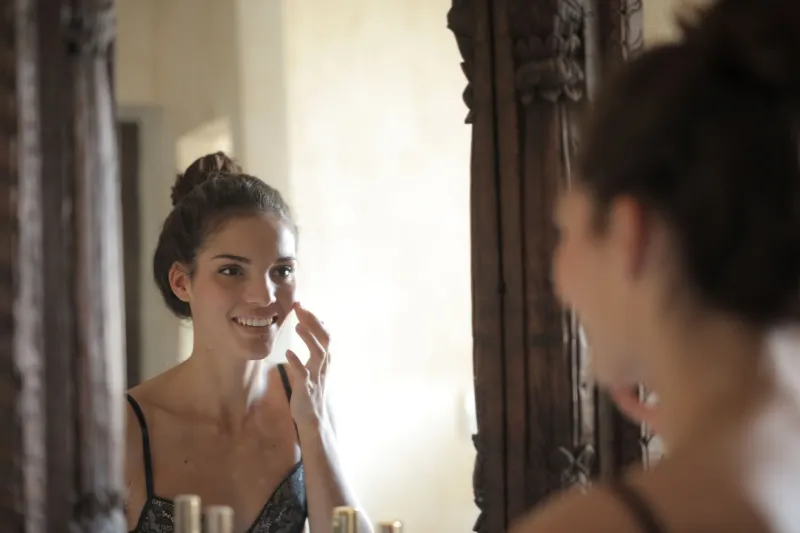
The physical effects are real: shoulders drop away from the ears, posture opens up, eye contact holds longer, the pace of movement slows slightly (which reads as composed rather than rushed). None of this is conscious. It's your nervous system responding to a familiar cue that says you've got this.
Why Consistency Is the Whole Point
This is where the "signature scent" concept goes from being a stylish idea to a genuinely functional one. The more consistently you wear a particular fragrance — in contexts where you're performing at your best — the stronger the association becomes.
Think of it like muscle memory, but for your emotional and physical state. A musician who practices the same warm-up before every performance isn't just loosening their fingers. They're cueing their brain and body into a familiar readiness state. Your fragrance can do the same thing.
This is also why switching scents constantly, while fun, doesn't build the same kind of anchored confidence. Variety is great for exploration, but a rotating cast of fragrances doesn't give your nervous system a consistent cue to latch onto.
Building the Anchor: What This Looks Like in Practice
You don't have to do anything complicated here. The process is more about intentionality than effort.
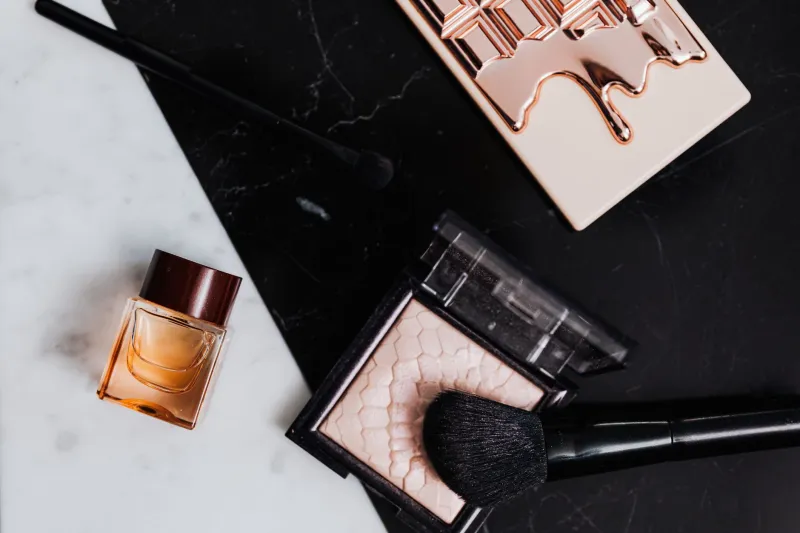
Choose a fragrance that genuinely resonates with you — not one you wear because it was a gift or because it was on sale, but one that, when you smell it, feels like you. Then wear it deliberately. Put it on before situations where you want to feel grounded and confident: important meetings, social events, workouts, creative sessions, whatever matters to you.
Over time, the scent becomes associated with those states. And eventually, the act of applying it starts to produce those states, rather than just accompanying them. The ritual of spritzing on your fragrance becomes a pre-performance cue, the same way an athlete might have a specific warm-up sequence or a musician might have a backstage ritual.
The Way You Smell Changes the Way You Move
Here's the part that's easy to underestimate: other people pick up on this. Not the scent itself necessarily — though that's part of it — but the physical confidence that comes with it. The open posture, the unhurried pace, the steadiness of someone who's fully arrived in their own body.
Fragrance, at its best, isn't a finishing touch. It's a layer of the whole system — the one that works on you from the inside out, before you've said a single word or made a single impression. When you find the scent that does that, and you commit to wearing it consistently, you're not just smelling great. You're training yourself to show up differently.
And that's the kind of glow-up that doesn't wash off.